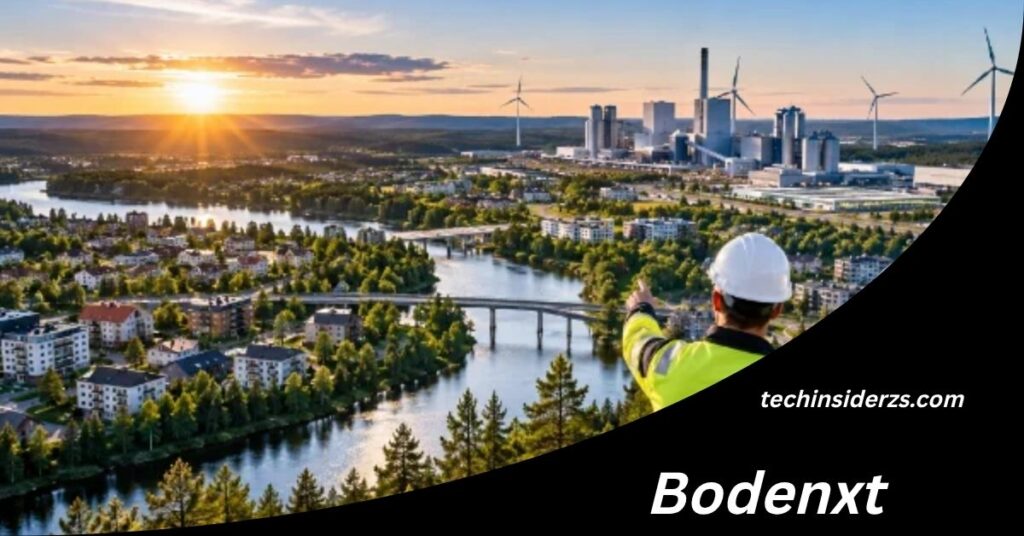
Bodenxt is a development platform used by the Municipality of Boden in northern Sweden to coordinate and manage a period of unusually rapid community and industrial development. The platform is closely connected with Boden’s green industrial transition, including the major green steel investment by Stegra, but Bodenxt is much broader than a single company or industrial project.
The Municipality of Boden describes Bodenxt as the platform for the municipality’s major green transition. Its work brings together important areas such as skills supply, living and housing, business development, and infrastructure above and below ground. The municipality says Boden is facing a development leap equivalent to roughly 20 years of societal development within only a few years.
This makes Bodenxt an interesting example of how a municipality can organize its response when industrial investment creates rapid changes in housing, employment, transportation, public services, infrastructure, and local business activity.
For people searching for information about Bodenxt, one point is especially important: Bodenxt should not normally be understood as a commercial software product. It is better understood as an organized municipal development platform and framework for coordinating the transformation of Boden.
This article explains what Bodenxt means, why it was created, how it connects with Stegra and green steel, what areas it covers, what has happened so far, the challenges facing Boden, and what the initiative could mean for the future of northern Sweden.
What Is Bodenxt?
Bodenxt is the Municipality of Boden’s development platform for managing the municipality’s major green and social transformation.
In simple terms, Bodenxt helps organize the many different things that must happen when a community experiences rapid growth.
A large industrial investment does not affect only a factory. New industrial activity can create demand for:
- Workers
- Housing
- Roads
- Railways
- Water and wastewater systems
- Schools and public services
- Local businesses
- Skilled workers
- Transportation
- Energy infrastructure
- Community facilities
- Recreation and cultural opportunities
These areas are connected. For example, a company may need more employees. Those employees need somewhere to live. New housing requires infrastructure. A larger population creates demand for schools, healthcare, shops, transportation, and other services.
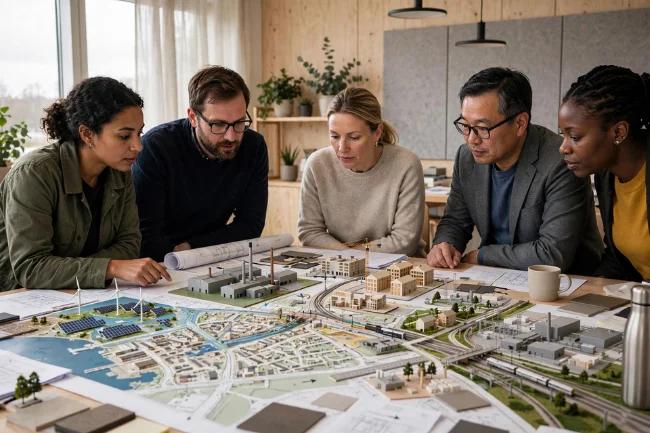
Bodenxt provides an organizational structure for dealing with these connected needs rather than treating each issue as completely separate.
The Municipality of Boden says the platform was created because the community is experiencing a development leap equivalent to around 20 years within a much shorter period.
This is why Bodenxt is better understood as a community development framework than as an ordinary technology platform.
Is Bodenxt a Software Platform?
No. Based on the Municipality of Boden’s official description, Bodenxt is not a conventional software application, SaaS product, mobile app, or commercial technology platform.
The municipality describes Bodenxt as a development platform connected to the transformation of the entire community.
This distinction is important because the word “platform” can have different meanings.
In the technology industry, a platform might mean software, cloud infrastructure, an online marketplace, or a digital service. In the context of Bodenxt, however, platform refers to an organized way of managing development work across different parts of the municipality.
The municipality’s own material explains that Bodenxt was established as an organized development platform alongside the ordinary municipal administrative structure. A municipal audit document also describes the initiative as a development platform and notes that it involved project coordination across several development areas.
Therefore, someone searching for “Bodenxt platform” should not assume that they need to download software or purchase a subscription.
The more useful question is: how is Boden organizing its rapid growth?
That is where Bodenxt becomes important.
Why Was Bodenxt Created?
Bodenxt was created in response to a major change in the economic and social environment of Boden.
Boden is located in Norrbotten in northern Sweden. The region has become an important area for green industrial investment, particularly projects involving lower-carbon industrial production and renewable electricity.
Also Read: Viltnemnda: A Complete Guide to Norway’s Local Wildlife Management
The establishment of Stegra’s green steel operation in Boden has been an important accelerator for the transformation.
However, the municipality recognized that an industrial establishment of this scale creates challenges beyond the industrial site itself.
A factory needs employees.
Employees need homes.
Homes need roads and utilities.
A growing population needs public services.
Companies serving the new industrial economy need skilled workers.
Transportation systems need to handle additional traffic and freight.
This chain of effects explains the basic logic behind Bodenxt.
The municipality has described the approach as one that focuses on processes rather than traditional administrative departments. A 2025 municipal article explained that Bodenxt was developed to cross administrative boundaries and bring together municipal companies and functions around shared development goals.
Bodenxt and the Green Transformation of Boden
The phrase “green transformation” is central to understanding Bodenxt.
Boden is becoming part of a wider northern European movement toward new industrial production based on cleaner energy and lower-carbon technologies.
The municipality describes northern Sweden as a region experiencing significant investment in green reindustrialization. It also presents Boden as a location where industry, business, infrastructure, skills, and community development need to evolve together.
This means that Bodenxt is not only about economic growth.
It is also about whether growth can be managed in a way that creates a functioning community.
A successful industrial transition requires more than industrial buildings. It requires people to want to live in the area, businesses to have opportunities, infrastructure to function, and public services to keep pace.
That broader perspective is one of the most important ideas behind Bodenxt.
How Stegra Fits Into Bodenxt
Stegra is one of the most important factors behind the rapid transformation of Boden.
The company was previously known as H2 Green Steel. Its planned green steel facility in Boden has attracted substantial investment and is expected to create significant employment and economic activity.
The Municipality of Boden identifies Stegra’s establishment as an important accelerator for the wider transformation.
However, Bodenxt and Stegra are not the same thing.
Stegra is a company developing an industrial project.
Bodenxt is the municipality’s development platform for managing the broader societal changes associated with industrial and economic transformation.
This distinction helps explain why Bodenxt includes topics such as housing, skills, business development, and infrastructure.
In April 2026, the Municipality of Boden reported that a new financing round of approximately SEK 16 billion would allow construction of Stegra’s green steel facility in Boden to continue. The municipality said the financing was an important signal for the wider transformation, while also emphasizing that housing and community development remained major priorities.
The relationship can therefore be simplified as follows:
Stegra creates major industrial demand.
Bodenxt helps address the wider community requirements created by that transformation.
The Main Areas of Bodenxt
The Municipality of Boden identifies several major development areas within Bodenxt.
These include skills supply, living and housing, business development, and infrastructure above and below ground. The municipality’s materials also describe a broader set of connected projects and workstreams supporting the transformation.
Skills Supply
Rapid industrial development requires people with the right skills.
This includes engineers, technicians, construction workers, project managers, service workers, specialists, and many other professions.
The challenge is not simply finding employees.
The municipality also needs to make Boden attractive enough for workers and families to relocate there.
Skills supply therefore connects employment with education, recruitment, relocation, housing, and quality of life.
In January 2026, Boden launched an engineering program aimed at preparing people for future jobs emerging from the area’s industrial and defense-related development.
The municipality has also worked on job matching. In 2025, it reported the launch of a job-matching service intended to help local businesses find skilled employees.
These activities demonstrate an important feature of Bodenxt: workforce development is treated as part of community development rather than as a separate employment issue.
Living and Housing
Housing is one of the biggest challenges associated with Boden’s rapid growth.
New workers cannot move to a community if there are not enough homes.
The problem becomes even more complicated when demand comes from several groups at once. Industrial workers, contractors, families, local residents, defense personnel, students, and other workers may all compete for available housing.
The Municipality of Boden reported in April 2026 that the vacancy rate for rental apartments was only 0.23 percent. It also said several thousand guest workers were temporarily living in the municipality.
In May 2026, the municipality described the housing shortage as an urgent challenge. It said the vacancy rate was close to zero and warned that limited housing could affect population growth and companies’ ability to recruit workers.
This illustrates why housing is central to Bodenxt.
A new industrial job is not enough to create sustainable population growth.
People also need a place to live.
Business Development
Bodenxt also supports the wider business ecosystem.
Large industrial projects can create opportunities for smaller companies that provide construction, transportation, maintenance, technology, hospitality, professional services, food, retail, and other products and services.
This can create what economists sometimes call a multiplier effect.
A major employer does not operate in isolation. Its presence can generate demand throughout the local economy.
Boden has also been reviewing its broader growth program as the economic environment changes. In May 2026, the municipality reported that its growth program, established in 2017, was under review because green industrial development, defense expansion, and new business establishments had changed the municipality’s position.
This is an important development because it shows that rapid growth requires planning to be updated.
A strategy that worked before major industrial expansion may need to be adjusted as the local economy changes.
Infrastructure
Infrastructure is another major component of Bodenxt.
Infrastructure includes roads, railways, water, wastewater, utilities, walking and cycling routes, and other systems needed for a functioning community.
Industrial growth can place pressure on these systems very quickly.
Boden has therefore been investing in transportation and utility infrastructure.
One major example is the railway connection to Boden Industrial Park.
In June 2026, the Municipality of Boden reported that the new railway connecting Boden Industrial Park had been officially inaugurated. The municipality said the project was delivered ahead of schedule and under budget.
The municipality’s infrastructure corridor also includes new road, railway, and walking and cycling connections designed to improve access to Boden Industrial Park and support freight movement by rail.
Infrastructure is therefore not simply a supporting detail.
It is a core requirement for making industrial growth practical and sustainable.
Why Housing Has Become a Major Bodenxt Issue
Housing may be one of the clearest examples of the connection between industry and community development.
Imagine that a company creates thousands of jobs in a small or medium-sized community.
At first glance, this appears to be an economic success.
But if there are not enough homes, workers may have difficulty relocating.
Some may commute from other areas.
Others may live temporarily in contractor accommodation.
Local residents may face increased competition for rental housing.
Businesses may have trouble recruiting employees.
Young residents may struggle to find their first homes.
Older residents may have difficulty moving into housing that better matches their needs.
This is why the housing issue affects more than new arrivals.
The Municipality of Boden has specifically said that the housing shortage affects existing residents by reducing movement within the housing market.
The municipality’s current housing information also identifies strong demand linked to both industrial growth and the expansion of Sweden’s defense sector. Its published figures include a projected population increase of more than 4,000 by 2030, more than 10,000 direct and indirect jobs in the region, about 2,000 new jobs linked to Stegra, and more than 1,300 apartments in current local development plans.
These figures are planning and development indicators rather than guarantees. Actual population and employment outcomes can change.
Bodenxt and Temporary Housing
Temporary housing has also been part of the response to rapid growth.
Contractors and workers involved in large construction projects may need accommodation before permanent housing becomes available.
The Municipality of Boden previously developed plans intended to enable thousands of contractor homes across several areas. The municipality said the objective was to reduce pressure on the existing housing market while providing suitable accommodation for contractors.
Temporary housing can help solve a short-term capacity problem.
However, it is not a complete substitute for permanent housing.
Long-term population growth requires homes where individuals and families can build stable lives.
That distinction is important when evaluating the wider purpose of Bodenxt.
Infrastructure and Boden Industrial Park
Boden Industrial Park is a major part of the area’s industrial transformation.
Industrial facilities need reliable transportation for workers, raw materials, products, equipment, and other supplies.
That is why railway infrastructure has become particularly important.
The new railway connection to Boden Industrial Park was officially inaugurated in June 2026. The municipality described it as an important infrastructure project for the area’s industrial transformation and said the project had been delivered ahead of schedule and under budget.
The infrastructure corridor also includes road and walking and cycling connections.
This shows how Bodenxt operates across different scales.
The transformation involves large industrial systems, but it also involves everyday infrastructure used by residents.
Also Read: Robyoc.online: The Website, Technology Content, Safety, and Digital Trust
Water and Wastewater Infrastructure
Water and wastewater systems are easy to overlook when discussing industrial transformation.
Yet they are essential.
More people require more water.
More businesses require water and wastewater capacity.
New neighborhoods increase demand.
Industrial facilities can create additional infrastructure requirements.
In January 2026, Boden reported plans for a new process building at the Svedjan wastewater treatment plant because the existing wastewater system was already under pressure from growth.
In April 2026, the municipality also reported that work was underway to expand the Svedjan wastewater treatment plant. The project was intended to increase capacity and support a growing population while meeting stricter treatment requirements.
This is a useful example of what community transformation looks like in practice.
Green industrial development is not only about advanced factories and clean energy.
It also requires basic municipal systems to grow.
Bodenxt and Digital Technology
Although Bodenxt itself is not a conventional software product, technology can still play an important role in Boden’s transformation.
The municipality has supported digital and technology-related projects connected to its wider development.
For example, Boden was included in an EU-supported project involving 5G Edge technology. The municipality said the initiative could support faster data handling and create opportunities for smarter community functions and AI-related applications.
This distinction is worth remembering.
Bodenxt is the development platform.
Digital technologies can be tools used within the wider transformation.
The two concepts should not be treated as identical.
Bodenxt and Green Steel
Green steel is one of the most important terms associated with Bodenxt.
Traditional steelmaking has historically been associated with substantial greenhouse gas emissions, especially when fossil fuels are used in key production processes.
Green steel projects aim to reduce emissions by using alternative production methods and cleaner energy systems.
Stegra’s project in Boden is part of this wider industrial transition.
The municipality has connected Stegra’s establishment with Boden’s transformation, but Bodenxt encompasses much more than steel production.
This distinction is important for understanding the search term “Bodenxt green steel.”
Bodenxt is not the name of a green steel technology.
It is the broader development framework surrounding Boden’s transformation.
Economic Opportunities Created by Bodenxt
Bodenxt has the potential to create opportunities in several parts of the economy.
The most obvious area is industrial employment.
However, the effects can extend much further.
Potential areas of economic activity include:
- Engineering
- Construction
- Logistics
- Transportation
- Hospitality
- Restaurants
- Retail
- Information technology
- Professional services
- Property development
- Energy services
- Environmental technology
- Maintenance
- Education
- Healthcare
- Local tourism
A growing population can increase consumer demand.
Industrial investment can create demand for suppliers.
New infrastructure can create construction and engineering opportunities.
Population growth can strengthen local services.
These effects can reinforce each other.
However, economic opportunity is not automatic.
Local companies need the capacity, skills, financing, infrastructure, and networks necessary to participate.
That is one reason business development is included in the Bodenxt structure.
Skills and Workforce Development in Boden
Workforce availability is one of the most important factors in Boden’s transformation.
A community can have investment and industrial projects, but those projects still require people.
Boden has therefore developed programs aimed at recruitment and skills matching.
The municipality reported in February 2025 that a tool called Robot Charlie was helping connect businesses with qualified candidates.
The municipality has also worked on job matching services for local businesses.
These initiatives show that workforce development can involve both traditional education and newer approaches to recruitment.
The larger lesson is that economic transformation depends on people as much as physical infrastructure.
Population Growth and Relocation
Boden has already experienced population changes connected with the industrial transition.
In December 2025, the municipality reported that more than 600 people had moved to Boden in connection with Stegra’s establishment. It also reported that hundreds of employees had used the municipality’s Relocation Service.
Relocation is particularly important for a northern community because potential employees may come from other parts of Sweden or from other countries.
A successful relocation system therefore needs to consider more than employment.
People may also need:
- Housing
- Information
- Schools
- Family support
- Transportation
- Social networks
- Language assistance
- Recreation
- Cultural opportunities
- Local community connections
This is another reason why Bodenxt focuses on the wider living environment.
The Human Side of Bodenxt
It is easy to describe Bodenxt using words such as infrastructure, investment, industry, jobs, and green transition.
But there is a human side to the project.
People moving to Boden are not simply workers.
They are residents.
They may have partners, children, hobbies, cultural interests, and long-term plans.
A person deciding whether to move to Boden may ask questions such as:
Can my family find a home?
Can my partner find work?
Are there good schools?
What is the local community like?
Can I access public services?
Are there activities for children?
Can I build a long-term life here?
These questions matter because economic development becomes more sustainable when people see the community as a place to live rather than simply a place to work.
The Municipality of Boden has increasingly emphasized the need to create conditions for people to live, build a life, and thrive in the community.
Boden Sustainability Center
Another example of the broader human dimension is the planned Boden Sustainability Center.
In June 2026, the municipality reported that the project was moving from vision toward implementation. The initiative is intended to create a meeting place where people, organizations, and initiatives can contribute to sustainable societal development.
The project involves several partners, including Stegra, Polar Structure, Boden Tillsammans, Boden Business Park, and the Municipality of Boden.
The reported project budget exceeds SEK 16 million, with the project scheduled to run from autumn 2026 through summer 2029.
This type of project shows that community transformation is not only about industrial capacity.
It can also involve knowledge sharing, community participation, sustainability, culture, and social development.
Challenges Facing Bodenxt
Rapid development creates opportunities, but it also creates risks and practical challenges.
Understanding these challenges is important for an accurate view of Bodenxt.
Housing Shortages
The housing shortage is already a major issue.
Very low rental vacancy can make it difficult for new workers and families to relocate.
It can also affect existing residents.
Workforce Competition
Different industries and sectors may compete for the same skilled workers.
Industry, construction, defense, public services, healthcare, and local businesses all need employees.
Infrastructure Pressure
Roads, railways, water systems, wastewater systems, energy networks, and public services must expand at a suitable pace.
Construction Capacity
Having a planning pipeline does not automatically mean that buildings will be completed quickly.
Construction companies, materials, financing, permits, labor, and market conditions all affect delivery.
Population Adjustment
Population growth may not occur evenly.
Some workers may stay temporarily.
Others may move permanently.
Actual population development depends on housing, employment, family circumstances, and wider economic conditions.
Managing Expectations
Large industrial projects attract significant attention.
Communities must balance economic opportunities with realistic expectations about timelines, jobs, population growth, and infrastructure.
This is particularly important because major industrial projects can change over time.
What Makes Bodenxt Different From a Normal Municipal Project?
A traditional municipal project might focus on one clearly defined objective.
For example:
- Build a road.
- Construct a school.
- Upgrade a wastewater facility.
- Create a housing development.
- Improve public transportation.
Bodenxt is different because the transformation involves many connected objectives at once.
A road may support an industrial site.
The industrial site may create jobs.
The jobs may increase housing demand.
Housing development may require water and wastewater expansion.
Population growth may require schools and public services.
New businesses may need skilled workers.
The system is interconnected.
This is why Bodenxt’s process-oriented approach is significant.
Instead of asking only, “Which department owns this issue?” the approach can ask, “What needs to happen for the community to function?”
That is a useful model for complex community development.
What Can Other Communities Learn From Bodenxt?
Bodenxt may be relevant beyond Sweden because many communities around the world face similar problems.
A large factory, data center, energy project, logistics hub, or technology investment can rapidly change a local economy.
The lesson is that communities should not necessarily plan only for the project itself.
They should also consider the secondary effects.
For example:
If 2,000 new jobs arrive, where will employees live?
If population increases, how will schools respond?
If freight increases, can existing roads handle it?
If businesses expand, where will they locate?
If new residents arrive internationally, what support will they need?
If water use increases, can the treatment system handle it?
These are not separate questions.
They are parts of one development system.
Bodenxt provides an example of attempting to organize these connected questions within one broader development framework.
Bodenxt and Sustainable Community Planning
Sustainability has several dimensions.
Environmental sustainability is one.
Economic sustainability is another.
Social sustainability is also important.
A community may reduce industrial emissions while still facing housing shortages.
It may create jobs while placing excessive pressure on infrastructure.
It may attract investment while failing to provide enough public services.
A truly sustainable transition therefore requires balance.
Bodenxt’s broad scope reflects this reality.
The municipality is working not only with industrial development but also with housing, infrastructure, skills, businesses, and community life.
This does not guarantee that every challenge will be solved.
It does, however, demonstrate why a broad planning framework can be useful during a rapid transition.
Is Bodenxt Connected to the Swedish Green Transition?
Yes.
Bodenxt is directly connected to the wider green industrial transformation taking place in northern Sweden.
Boden is positioned within a region where substantial investment is being directed toward new industrial activity based on Sweden’s access to renewable electricity and other resources.
Stegra’s green steel project is one of the most visible examples.
At the same time, Boden is also experiencing growth related to defense, technology, infrastructure, and other business activities.
The municipality’s 2026 growth-program review specifically noted that green industrial development, expansion of the Swedish Armed Forces, and new company establishments have changed the local development environment.
This means Bodenxt should be viewed within a larger regional transformation rather than as an isolated local project.
What Is the Future of Bodenxt?
The future of Bodenxt will depend on how successfully Boden can manage rapid growth over the coming years.
Several areas will be especially important.
First, housing construction will need to keep pace with demand.
Second, infrastructure will need to expand without creating unnecessary delays or environmental problems.
Third, businesses will need access to skilled workers.
Fourth, the municipality will need to maintain high-quality public services.
Fifth, residents will need meaningful opportunities to participate in the development of their community.
Sixth, the economic benefits of industrial development will need to spread beyond a small number of large companies.
The municipality is already continuing work across these areas.
Its 2026 news and development activity includes housing initiatives, infrastructure projects, wastewater expansion, skills programs, business development, and sustainability projects.
Bodenxt in Simple Words
For readers who want the shortest possible explanation, Bodenxt can be understood this way:
Bodenxt is the Municipality of Boden’s organized development platform for managing the rapid green and economic transformation of Boden in northern Sweden.
It is not simply a software product.
It is not the name of the green steel factory.
It is not a private technology company.
Instead, it brings together different areas of municipal and community development, including:
- Housing
- Skills
- Business development
- Infrastructure
- Industrial growth
- Community development
- Sustainable development
Its importance comes from the fact that all these areas are connected.
Also Read: Incestflox: Meaning, Online Presence, Search Safety, and What You Need to Know
Bodenxt Featured Snippet Answer
Bodenxt is a development platform created by the Municipality of Boden in northern Sweden to coordinate the community’s rapid green and industrial transformation. It is closely connected with Stegra’s green steel investment but covers a much wider range of issues, including housing, skills supply, business development, transportation, utilities, and infrastructure. The municipality created the platform because it expects an unusually rapid period of societal development.
Is Bodenxt a Company?
No. Bodenxt is not presented by the Municipality of Boden as a separate commercial company. It is a development platform associated with the municipality’s work to manage the transformation of Boden.
The municipality’s materials describe Bodenxt as an organized development platform operating alongside the ordinary municipal structure.
Is Bodenxt an AI Tool?
No. The official municipal description does not identify Bodenxt as an AI product.
Boden is involved in technology and digitalization projects, including work involving 5G Edge technology and AI-related community applications, but those activities should not be confused with the meaning of Bodenxt itself.
What Is Bodenxt Used For?
Bodenxt is used to coordinate and support the wider development of Boden during a period of rapid industrial and population growth.
Its areas include skills supply, housing and living, business development, and infrastructure.
How Is Stegra Related to Bodenxt?
Stegra’s establishment in Boden is an important accelerator of the transformation that Bodenxt is designed to manage.
Stegra is developing a green steel facility, while Bodenxt addresses the wider effects that industrial growth creates for the municipality.
The relationship can be summarized as:
Stegra = industrial investment.
Bodenxt = broader community development response.
What Are the Biggest Bodenxt Challenges?
The largest challenges include housing availability, workforce supply, infrastructure capacity, construction speed, and the need to maintain public services while the population and economy change.
The Municipality of Boden has specifically identified the housing shortage as an urgent issue.
Bodenxt FAQ
1. Does Bodenxt have an official app that residents need to download?
No official Municipality of Boden information identifies Bodenxt as a resident mobile application that people must download. Bodenxt is described as a development platform for the municipality’s transformation. Residents can instead access information through the Municipality of Boden’s official websites and services.
2. Can businesses outside Sweden participate in Boden’s development?
International companies may find opportunities connected with Boden’s industrial and economic development, but participation depends on the specific business opportunity, project, procurement process, regulations, and requirements involved. Boden’s transformation includes business development intended to support a broader business ecosystem.
3. Does Bodenxt control all development projects in Boden?
No. Bodenxt should not be interpreted as replacing every ordinary municipal process or every organization involved in development. Municipal planning, permits, companies, public authorities, developers, and other stakeholders continue to have their own responsibilities. Bodenxt provides a broader coordination structure.
4. Does Bodenxt mean that Boden’s population will definitely increase by a specific amount?
No. Population projections and development targets are planning indicators, not guarantees. Actual population growth depends on employment, housing availability, migration, economic conditions, family decisions, and many other factors. The municipality itself has highlighted housing availability as an important factor affecting future growth.
5. Can Bodenxt be used as a model for other cities?
The general approach may be useful for other communities experiencing rapid industrial or economic transformation, but there is no universal model that works everywhere. Each community has different geography, population, infrastructure, housing markets, industries, regulations, and public-service systems. Bodenxt is best viewed as a real-world example of cross-sector community planning rather than a ready-made solution for every city.
Conclusion
Bodenxt is an important example of how a municipality can respond when economic and industrial change happens at an unusually fast pace.
The Municipality of Boden created Bodenxt to coordinate the broader transformation taking place in northern Sweden. The platform is closely connected with Stegra’s green steel establishment, but its scope is much wider. It includes housing, skills supply, business development, transportation, utilities, infrastructure, and the broader quality of life in the community.
The most important point to understand is that Bodenxt is not simply a technology product. It is a development and coordination framework.
Its story also shows why industrial development cannot be separated from community development.
A new factory needs workers.
Workers need homes.
Homes need infrastructure.
Growing communities need schools, services, transportation, businesses, and public facilities.
Successful development therefore requires these pieces to move together.
Boden’s experience also demonstrates that rapid growth creates real challenges. Housing shortages, workforce competition, infrastructure pressure, and construction capacity can all limit the speed at which a community can respond. In 2026, the Municipality of Boden continued to identify housing as a major concern while advancing infrastructure, wastewater, skills, business, and sustainability initiatives.
The future of Bodenxt will ultimately be measured not only by industrial investment but also by whether Boden can create a community where people can work, live, build families, start businesses, and participate in a sustainable local economy.
For that reason, Bodenxt is best understood as a case study in modern community development: a municipality attempting to connect industrial growth with the everyday systems and human needs that make long-term development possible.