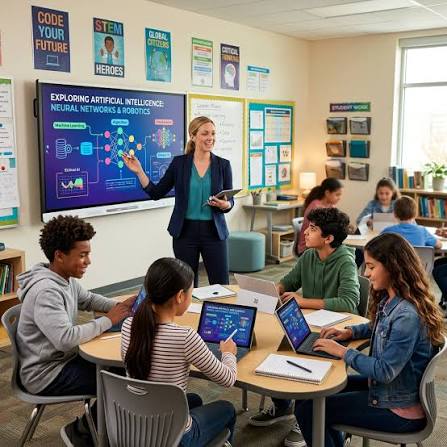
Portable classrooms give you dedicated space for STEM instruction without requiring every activity to share an existing classroom. Flexible floor plans, technology infrastructure, and customizable interiors let you shape the space around your educational program. Mobile offices offer a modular option for teachers or administrators who require a separate support space alongside STEM classrooms. Here are some ways to utilize portable classrooms for STEM education:
Organize Project Zones
STEM lessons frequently shift between instruction, experimentation, documentation, and group assignments during one class period. A portable classroom gives you space to create distinct areas, and flexible layouts accommodate different project formats. Students might begin with teacher instruction, move into collaborative work, and finish by documenting their findings.
Your classroom arrangement impacts how students transition between these activities. Worktables positioned together support group projects, while separate surfaces provide room for individual assignments. When your program includes several STEM courses, flexible interior arrangements give teachers more control over available teaching areas.
Multiple classroom configurations also support programs that require several dedicated instructional spaces. Two classrooms might house separate courses, while larger configurations support program expansion. A multiroom arrangement gives you space to separate project development from classroom instruction.
Integrate Classroom Technology
Digital tools support STEM coursework through research, presentations, data collection, and connected assignments. Confirming your classroom has the infrastructure to support lessons helps teachers use digital tools effectively, and they can maintain reliable access to technology. Some modular buildings include data ports, networking, electrical layouts, and audiovisual systems.
Technology placement also affects how students participate during instruction. Interactive displays support demonstrations, while accessible connections keep devices positioned near student work areas. When several digital activities occur simultaneously, thoughtful placement prevents equipment from obstructing classroom circulation.
Support Practical Learning
Practical STEM instruction requires space for equipment, materials, and student movement during classroom activities. Lab tables provide dedicated surfaces for experiments, and lockers store materials used across multiple lessons. A portable classroom gives you room to arrange those elements around the specific activities taught there. Some features that support practical STEM instruction include:
- Dedicated surfaces for project assembly
- Storage near frequently used classroom materials
- Clear pathways between active work areas
- Wall space for diagrams and project displays
- Separate areas for teacher demonstrations and student workstations
Storage placement also affects how quickly a classroom changes between activities. Keep frequently used materials accessible by placing storage near relevant work areas, while placing larger equipment outside primary circulation paths. This lets your classroom accommodate hands-on instruction without leaving every project component on student worktables.
Connect Instruction Spaces
Some STEM programs involve several courses that require different classroom arrangements. One portable classroom could support mathematics instruction, while another provides space for engineering-related coursework. Connected modular units create related instructional areas without combining all activities into a single room. Mobile offices can also provide a separate workspace for teachers and coordinators who support those instructional programs. Separate spaces also help teachers manage different group sizes and course requirements. Smaller classes work well as dedicated instructional areas, but larger programs or experiments typically need more room. Multi-classroom configurations provide a practical framework for STEM programs that span several subjects.
Adapt Program Layouts
STEM education changes as your school introduces new courses, equipment, and instructional methods. A classroom designed for multiple programs benefits from features that remain useful as its purpose changes. Customizable portable classrooms accommodate various interior configurations, and permanent modular buildings offer an alternative for long-term educational needs. Planning elements that help your STEM space accommodate changing instructional requirements include:
- Floor Plans: Match room dimensions to enrollment and planned activities.
- Interiors: Configure classroom features around specific teaching requirements.
- Technology: Reserve suitable locations for connectivity and audiovisual equipment.
- Accessibility: Include appropriate accessible entrances and classroom features.
- Expansion: Add modular units as instructional needs grow.
Add Mobile Offices and Classrooms
STEM programs involve coordination between classroom instruction, teacher planning, and administrative activities. Mobile offices offer schools a way to separate these functions, while portable classrooms remain focused on student learning. A well-planned support area also creates space for curriculum development as your STEM program adds courses or changes its instructional model. Speak with a modular building specialist to plan classroom and support spaces around your school’s current STEM requirements and future program changes.
- Utilizing Portable Classrooms for STEM Education
- GrammarVista vs Grammarly: Which One Helps Your Writing More?
- GrammarVista.com Review: Grammar Guides for Learning American English
- Sites Like TechTrendery.com: 7 Tech and News Blogs Worth Following
- TechTrendery.com Review: Tech, News and Biography Content Explained