
Antarvafna: Meaning, Inner Awareness, Practice, Benefits, and Modern Relevance
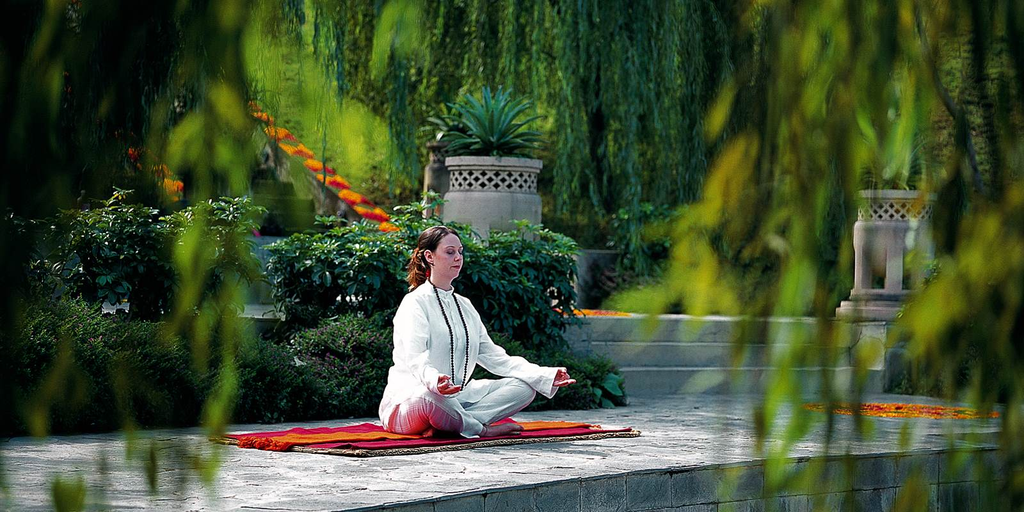
Antarvafna is a term used online to describe inner awareness, inward perception, self-observation, and the calm practice of looking within. In simple language, it refers to paying attention to what is happening inside you: your thoughts, feelings, emotions, reactions, physical sensations, and personal patterns.
The idea behind Antarvafna is simple but meaningful. Instead of always looking outside yourself for answers, you pause and notice your internal experience. You do not necessarily try to stop your thoughts or force yourself to feel positive. You simply observe what is happening with patience and curiosity.
This idea has become increasingly relevant in the United States and other highly connected societies. Smartphones, social media, work pressure, constant notifications, and a fast daily routine can make quiet reflection difficult. Practices based on mindfulness and self-awareness have therefore received growing attention.
There is an important point about the word itself, however. The exact spelling “Antarvafna” is not a widely established English psychological or medical term, and there is limited reliable evidence showing that it is a standardized name for a specific ancient practice. Several websites currently describe it in different ways, including inner awareness, introspection, inner observation, or even inner conflict. Therefore, it is more accurate to discuss Antarvafna as a contemporary term or concept associated with inward awareness rather than present one disputed definition as historical fact.
The underlying idea does have clear connections to established concepts such as introspection, mindfulness, meditation, self-reflection, and contemplative practice. The American Psychological Association defines introspection as an attempt to directly access one’s own internal psychological processes, perceptions, judgments, or states.
This guide explains what Antarvafna can mean, how it may relate to established practices, how beginners can approach it safely, what research actually says, and why inner awareness matters in modern life.
What Is Antarvafna?
Antarvafna can be understood as awareness within or inner perception.
At its simplest, it means turning your attention inward and noticing your internal experience.
That experience can include:
- Thoughts
- Feelings
- Emotions
- Memories
- Physical sensations
- Habits
- Reactions
- Desires
- Fears
- Personal values
- Mental patterns
For example, imagine receiving a critical message at work.
Your first reaction might be anger.
Without inner awareness, you might immediately reply.
With an Antarvafna-style approach, you could pause and notice:
“I feel angry.”
Then you might notice:
“My body feels tense.”
Then:
“I am worried that my manager thinks I performed badly.”
That small pause changes the situation. You have not denied the emotion. You have simply created space to understand it before acting.
This is one of the most useful ways to understand inner awareness: notice first, react later.
What Does Antarvafna Mean?
The meaning commonly associated with Antarvafna online is inner awareness, inner observation, inward reflection, or conscious observation of the mind. Current web discussions use the word in several overlapping ways rather than following one universally accepted definition.
A practical definition is:
Antarvafna is the practice of calmly observing one’s internal thoughts, emotions, sensations, and reactions with awareness rather than immediately judging or acting on them.
This definition is useful because it does not require a particular religion, belief system, teacher, or ritual.
It also avoids making claims that cannot be supported by established evidence.
The concept is closely related to introspection. However, introspection can sometimes involve actively examining or explaining why you think or feel something, while an awareness-based practice may simply involve noticing what is present.
For example:
- Introspection may ask, “Why did that comment upset me?”
- Inner awareness may first notice, “That comment upset me.”
- Reflection may then ask, “What does this tell me about my expectations?”
- Mindfulness may encourage you to observe the emotion without immediately judging it.
These approaches can overlap.
Is Antarvafna an Ancient Sanskrit Practice?
This is one area where caution is important.
Many websites describe Antarvafna as an ancient Sanskrit or Indian practice. However, the exact word is not well established in major English reference sources, and there is not enough reliable evidence to confidently present the modern spelling “Antarvafna” as the name of a clearly documented classical practice.
Some online sources make different claims about the origin and meaning of the word. Some connect it with inward observation, while others describe it as inner conflict or internal desire.
This disagreement matters.
A trustworthy explanation should distinguish between:
- The meaning currently given to the word online.
- The broader philosophical traditions that discuss looking inward.
- The modern scientific research on mindfulness and meditation.
The idea of examining one’s inner life is certainly not new. Indian philosophical, yogic, and contemplative traditions contain many established ideas involving awareness, self-inquiry, meditation, and observation of mental experience.
But it would be inaccurate to claim that every modern description of Antarvafna comes directly from an ancient scripture unless a specific historical source can be identified.
For readers in the United States, this distinction is particularly useful because wellness content online sometimes mixes historical traditions, modern self-help language, and scientific terminology without clearly separating them.
Antarvafna and Inner Awareness
Inner awareness is the central idea associated with Antarvafna.
Most people are aware of their surroundings. We notice traffic, conversations, screens, deadlines, advertisements, and other people.
But awareness can also be directed inward.
You can notice:
“I am tired.”
“I am becoming impatient.”
“I keep thinking about the same problem.”
“I feel nervous before this meeting.”
“I am avoiding something because I am afraid of failing.”
These observations may appear simple, but they can be valuable.
When people do not notice their internal reactions, they may behave automatically.
A person may become angry before realizing they are angry.
Another person may agree to something before recognizing that they did not actually want to agree.
Someone else may continue working while exhausted because they never pause long enough to recognize their fatigue.
Inner awareness creates an opportunity to notice these patterns.
How Antarvafna Relates to Mindfulness
Antarvafna and mindfulness are not necessarily identical terms.
Mindfulness is a well-established concept with extensive research. The National Center for Complementary and Integrative Health describes mindfulness as maintaining attention or awareness on the present moment without judgment.
Antarvafna, as the term is currently used online, often emphasizes looking inward and observing thoughts and feelings.
There is therefore considerable overlap.
A simple comparison looks like this:
| Concept | Main focus |
| Antarvafna | Inner awareness and observation |
| Mindfulness | Present-moment awareness without judgment |
| Introspection | Examination of internal psychological processes |
| Self-reflection | Thinking about experiences and their meaning |
| Meditation | A broad group of practices involving attention, awareness, or contemplation |
| Self-inquiry | Exploring questions about identity, beliefs, and experience |
The important point is that these terms should not be treated as interchangeable medical diagnoses or scientifically identical interventions.
Antarvafna is better understood as a descriptive concept connected to established practices rather than as a proven medical treatment.
Antarvafna vs. Meditation
Meditation is a broad category.
Some meditation practices involve focusing on breathing. Others use a repeated word or phrase. Some involve movement, visualization, compassion, or open awareness.
NCCIH notes that meditation has a long history and that many meditation techniques developed within Eastern traditions.
Antarvafna can resemble a form of open awareness meditation because the person observes internal experiences rather than trying to eliminate them.
However, you do not need to call every period of quiet self-observation “meditation.”
A person sitting quietly and noticing their emotions may simply be practicing self-reflection.
The terminology is less important than understanding what you are actually doing.
The Basic Principles of Antarvafna
Although Antarvafna is not a standardized clinical method, descriptions of the concept commonly emphasize several principles.
1. Turn Attention Inward
The first step is noticing what is happening inside you.
Instead of immediately focusing on external events, ask:
“What is happening inside me right now?”
You might notice tension, sadness, excitement, confusion, boredom, or calmness.
2. Observe Without Immediate Judgment
Inner awareness does not require labeling every feeling as good or bad.
Instead of:
“I should not be angry.”
Try:
“I notice anger.”
Instead of:
“I am a failure.”
Try:
“I notice that I am having a strong thought about failure.”
This language creates distance between an experience and your identity.
3. Notice Patterns
One emotional reaction may not tell you much.
Repeated reactions can be more informative.
Perhaps you become anxious whenever you receive an email from a certain person.
Perhaps you become frustrated whenever plans change.
Perhaps you repeatedly avoid difficult conversations.
Inner observation can help you identify these patterns.
4. Allow Feelings to Exist
The goal is not to force yourself to feel calm every moment.
Sadness, anger, fear, disappointment, and uncertainty are normal human experiences.
Also Read: Sosoactive: The Digital Media Platform
Awareness means recognizing them without automatically allowing them to control your behavior.
5. Respond Rather Than React
This may be the most practical benefit of inner awareness.
Reaction is often automatic.
Response involves a pause.
That pause may be only a few seconds, but it can create an opportunity to choose what to do next.
A Simple Antarvafna Practice for Beginners
You do not need special equipment to begin.
You can try a short five-minute practice.
Step 1: Find a Quiet Place
Sit somewhere reasonably comfortable.
You can sit in a chair, on a couch, or wherever you can remain undisturbed for a few minutes.
There is no requirement to sit in a particular traditional position.
Step 2: Notice Your Breathing
Do not force your breathing.
Simply notice that you are breathing.
Pay attention to the natural movement of the breath.
Step 3: Notice Your Body
Ask yourself:
“What sensations do I notice?”
You may notice:
- Tight shoulders
- A relaxed face
- Warm hands
- A fast heartbeat
- Tired legs
- Pressure in the chest
- General comfort
You do not need to change anything.
Step 4: Notice Your Thoughts
Thoughts will probably appear.
That is normal.
You may think about work, family, money, food, tomorrow’s schedule, or something that happened years ago.
Instead of following every thought, notice that thinking is happening.
Step 5: Notice Your Feelings
Ask:
“What emotion is present right now?”
You do not need a perfect answer.
You might say:
“I feel unsettled.”
“I feel calm.”
“I feel bored.”
“I am not sure what I feel.”
All of these are acceptable observations.
Step 6: Return to Observation
If you become distracted, gently return to noticing.
There is no need to criticize yourself.
Getting distracted is part of the process.
How Long Should You Practice Antarvafna?
There is no scientifically established “correct” Antarvafna duration because the term itself does not describe a standardized clinical program.
For beginners, five minutes can be enough to learn the basic skill.
You could gradually move to:
- 5 minutes
- 10 minutes
- 15 minutes
- 20 minutes
The goal should not be to achieve a particular number.
Consistency may be more useful than forcing long sessions.
You can also practice informal inner awareness during normal activities.
For example, before sending an angry email, pause for ten seconds and ask:
“What am I feeling?”
That is already a practical form of inner observation.
Antarvafna in Everyday Life
Inner awareness does not have to happen while sitting quietly.
It can become part of ordinary activities.
During Work
Before beginning a difficult task, ask:
“What is making this feel difficult?”
Perhaps the problem is not the task itself. Maybe you are tired, uncertain, or afraid of making a mistake.
Recognizing the real problem can make it easier to choose a useful response.
During Relationships
If someone says something upsetting, notice your reaction before responding.
Ask:
“What did I hear?”
“What did I assume they meant?”
“What emotion appeared?”
This can reduce unnecessary conflict.
During Stress
When you feel overwhelmed, stop for a moment.
Notice:
- Your breathing
- Your body
- Your thoughts
- Your strongest emotion
- The immediate problem
Then decide what actually needs attention.
Before Important Decisions
Inner awareness can help you distinguish between a genuine preference and an automatic reaction.
Ask:
“Do I really want this?”
“Am I doing this because I am afraid of disappointing someone?”
“Am I choosing this because it matches my values?”
These questions can improve self-understanding.
Potential Benefits of Inner Awareness
It is important not to overstate the benefits of Antarvafna itself because there is limited direct scientific research on the term.
However, related practices such as mindfulness and meditation have been studied.
Research summarized by NCCIH suggests that mindfulness-based approaches may help with symptoms related to stress, anxiety, and depression, although the strength of evidence varies by condition and intervention.
Potential practical benefits of developing inner awareness include:
Greater Emotional Awareness
You may become better at identifying what you feel.
Instead of simply saying “I feel bad,” you might recognize:
“I am disappointed.”
“I am worried.”
“I feel rejected.”
“I am exhausted.”
More precise emotional awareness can make it easier to decide what you need.
Better Pause Before Reaction
Awareness can create a gap between an internal experience and an external action.
That gap can be especially useful during arguments, stressful meetings, or difficult decisions.
Greater Self-Understanding
Regular reflection may help you recognize recurring patterns.
You may discover that certain situations repeatedly trigger the same thoughts or emotions.
Improved Attention to the Present
Mindfulness-based approaches focus on present-moment awareness. Research suggests they may be useful for certain forms of stress and emotional symptoms.
More Deliberate Decision-Making
When you understand your emotions and assumptions, you may be less likely to make decisions based entirely on immediate emotional pressure.
Greater Acceptance
Inner awareness does not require liking everything you discover about yourself.
It means being willing to notice your experience honestly.
What Does Science Say About Antarvafna?
This question requires careful wording.
There does not appear to be a substantial scientific literature specifically studying “Antarvafna” as a standardized intervention.
Therefore, claims that Antarvafna directly treats medical or psychological conditions should not be presented as established scientific facts.
Instead, we can examine research on related practices.
NCCIH reports that mindfulness and meditation have been studied for anxiety, depression, stress, pain, sleep, and other concerns. Results vary, and many studies have limitations.
A major systematic review of 47 trials involving 3,515 participants found moderate evidence that mindfulness meditation programs produced improvements in anxiety, depression, and pain, while evidence for some other outcomes was weaker. The review also found no evidence that meditation programs were superior to active treatments such as drugs, exercise, or behavioral therapies.
This leads to a balanced conclusion:
Inner-awareness practices may be useful for general well-being and may support certain mental health goals, but they should not automatically be treated as a replacement for professional medical or psychological care.
Is Antarvafna a Treatment for Anxiety or Depression?
No specific evidence currently supports describing Antarvafna itself as a treatment for anxiety or depression.
Some related mindfulness-based interventions have demonstrated benefits in research, but a particular practice should not be assumed to have the same evidence simply because it sounds similar.
NCCIH notes that mindfulness-based approaches can help some people with anxiety and depression, but the quality and consistency of evidence vary.
If someone has persistent anxiety, depression, panic symptoms, severe sleep problems, or thoughts of self-harm, professional care is more appropriate than relying only on self-guided inner observation.
In the United States, a licensed mental health professional or healthcare provider can help determine whether additional treatment is needed.
Can Looking Inward Ever Be Uncomfortable?
Yes.
Inner awareness is not always relaxing.
When you become quiet, you may notice worries or emotions that were previously hidden by constant activity.
This does not necessarily mean the practice is harmful, but it is a reason to approach it gently.
Research on meditation also shows that negative experiences can occur. NCCIH cites a 2020 review of 83 studies involving 6,703 participants in which about 8% of participants reported a negative effect, with anxiety and depression among the commonly reported experiences.
For this reason, “more meditation” is not automatically better.
If an exercise makes you significantly distressed, stop and consider speaking with a qualified professional.
Antarvafna and Mental Health Safety
Inner reflection should not become constant self-monitoring.
There is a difference between healthy awareness and repeatedly analyzing every thought.
Healthy observation might sound like:
“I notice that I am worried.”
Unhelpful overanalysis might become:
“Why did I have that thought? What does it mean? What does it say about me? What if it happens again?”
The second pattern can become exhausting.
A useful principle is:
Observe enough to understand, but not so much that observation becomes another source of distress.
People with significant trauma, severe anxiety, obsessive symptoms, or other mental health concerns may benefit from guidance from a trained professional when starting contemplative practices.
Antarvafna vs. Overthinking
These concepts are easy to confuse.
Overthinking usually involves getting trapped in repeated mental analysis.
Inner awareness involves noticing what is happening without necessarily continuing the mental story.
Consider this example:
“I cannot believe my coworker said that. Why did she say it? Maybe she hates me. Maybe everyone at work dislikes me. What if I lose my job?”
That is a chain of thoughts.
Inner awareness might sound like:
“I notice that I am worried about how my coworker sees me.”
The second statement identifies the experience without automatically building a larger story around it.
This distinction can make inward reflection more useful.
Antarvafna and Emotional Intelligence
Emotional intelligence involves recognizing, understanding, and managing emotions and responding appropriately to other people.
Inner awareness can support the first part of this process.
For example, before understanding another person’s emotions, you may need to recognize your own.
Suppose a family member disagrees with you.
You may initially feel anger.
If you notice that anger, you have an opportunity to ask:
“What exactly am I reacting to?”
Maybe the disagreement feels like rejection.
Maybe you are tired.
Maybe the subject is connected to an old argument.
Understanding the internal trigger can improve the quality of your response.
Antarvafna and Self-Reflection
Self-reflection is broader than simply observing thoughts.
It can involve looking back at experiences and asking what you learned.
A simple reflection exercise is:
- What happened?
- What did I feel?
- What did I think?
- How did I respond?
- What would I do differently next time?
This turns awareness into practical learning.
The key is to avoid turning reflection into self-criticism.
The purpose is not to prove that you are good or bad.
The purpose is to understand yourself more clearly.
How to Use Antarvafna Without Becoming Self-Critical
One of the biggest mistakes in self-reflection is judging everything you discover.
A person notices anger and thinks:
“I am a bad person.”
A person notices jealousy and thinks:
“There is something wrong with me.”
A person notices fear and thinks:
“I am weak.”
These judgments add another layer of suffering.
A healthier approach is:
“I noticed anger.”
“I noticed jealousy.”
“I noticed fear.”
The observation is factual.
The judgment is an interpretation.
Keeping these two things separate can make inner awareness more constructive.
Antarvafna in the Digital Age
The concept is particularly relevant in an environment where attention is constantly pulled outward.
A smartphone can provide:
- Messages
- News
- Videos
- Social media
- Advertisements
- Games
- Work notifications
- Entertainment
Every notification asks for some degree of attention.
Inner awareness asks a different question:
“What is happening inside me right now?”
For example, someone may open social media because they feel bored.
After ten minutes, they may feel more distracted.
Instead of automatically blaming the app, inner awareness might ask:
“What was I looking for when I opened it?”
Perhaps the person wanted connection, stimulation, reassurance, or simply a break.
That answer can be more useful than simply saying, “I waste too much time online.”
A 10-Minute Antarvafna Routine
For people who want a structured approach, a simple routine can look like this.
Minute 1: Pause
Put your phone aside.
Sit comfortably.
Take a few natural breaths.
Minutes 2–3: Notice the Body
Observe physical sensations without trying to change them.
Minutes 4–5: Notice Thoughts
Let thoughts appear and pass.
Do not try to solve every problem.
Minutes 6–7: Notice Emotions
Ask what emotion is strongest.
If you are uncertain, simply say, “Something feels uncomfortable.”
Minutes 8–9: Ask One Question
Choose one question:
“What do I need right now?”
“What am I avoiding?”
“What matters most today?”
“What am I reacting to?”
Minute 10: Return to the Day
Choose one small, practical action.
For example:
- Send the email later.
- Take a short walk.
- Have a difficult conversation calmly.
- Finish one task.
- Ask for help.
- Get some rest.
This final step matters because awareness becomes more useful when it informs real-world behavior.
Common Mistakes When Practicing Inner Awareness
Trying to Stop Every Thought
The human mind produces thoughts.
You do not need to eliminate them.
Expecting Instant Peace
A few minutes of reflection may not make you calm immediately.
Sometimes you may initially notice how busy your mind actually is.
Treating Every Thought as Truth
A thought is an internal event.
It is not automatically a fact.
Judging Your Emotions
Feeling angry does not automatically make you an angry person.
Feeling afraid does not automatically mean you are weak.
Spending Too Much Time Analyzing
Reflection should support life, not replace it.
Treating It as Medical Treatment
Inner awareness may complement healthy habits and professional care, but it should not be presented as a universal cure.
How Antarvafna Can Support Better Decisions
Decision-making is one of the most practical applications of inner awareness.
Suppose you are considering leaving a job.
Instead of asking only:
“Is this job good or bad?”
You can also ask:
“What am I feeling?”
“What specifically is causing the discomfort?”
“Am I exhausted, or is the job truly wrong for me?”
“Am I leaving because of fear?”
“Would I make the same decision after a week of rest?”
These questions do not provide an automatic answer.
They help separate facts from emotional reactions.
That distinction can lead to more thoughtful decisions.
Antarvafna and Relationships
Inner awareness can improve communication because relationships are affected by both what people say and how they interpret what is said.
Before responding to a difficult statement, consider:
“What did they actually say?”
“What did I assume they meant?”
“What emotion appeared in me?”
“What response would match my values?”
This approach does not mean ignoring disrespect or accepting harmful behavior.
It means becoming more aware of your own response before choosing your next action.
Antarvafna for Students and Young Adults
Students often face academic pressure, social expectations, career uncertainty, and constant digital stimulation.
A short inner-awareness routine may help students notice when they are:
- Procrastinating because a task feels difficult
- Comparing themselves with others
- Worried about grades
- Avoiding uncertainty
- Mentally exhausted
Instead of simply saying, “I am lazy,” a student might recognize:
“I am avoiding this assignment because I am afraid I will not do it well.”
That insight can lead to a practical solution, such as starting with one small section.
Antarvafna for Workplace Well-Being
Workplace stress often contains an internal component.
Two employees can experience the same deadline and respond differently.
One may think:
“This is impossible.”
Another may think:
“This is difficult, but I can handle one part at a time.”
Inner awareness does not change the workload, but it can help identify the thoughts and emotions accompanying the workload.
Also Read: The TechInsiderz.com Guide to Wearables and Fitness Trackers
Mindfulness-based workplace programs have been studied, and NCCIH reports that research suggests they may be promising for certain measures of workplace stress, although more research is needed.
What Antarvafna Is Not
Antarvafna should not be confused with several unrelated ideas.
It is not:
- A guaranteed cure for mental illness
- A replacement for psychotherapy
- A method for predicting the future
- A requirement to withdraw from society
- A demand to suppress emotions
- A reason to ignore practical problems
- A scientific diagnosis
- A substitute for professional medical advice
It is better viewed as a framework for paying attention to one’s internal experience.
Why the Term Is Difficult to Research
A major challenge is terminology.
Scientific research depends on clear definitions.
If one person uses Antarvafna to mean mindfulness, another uses it to mean introspection, and a third uses it to mean inner conflict, research results cannot automatically be combined.
This is why responsible writing about the term should avoid statements such as:
“Scientists have proven Antarvafna cures anxiety.”
A more accurate statement would be:
“Antarvafna is commonly described online as inner awareness, while related practices such as mindfulness and meditation have been studied scientifically.”
That distinction improves both accuracy and trustworthiness.
Search Intent Behind “Antarvafna”
People searching for Antarvafna may have several different goals.
Informational Search Intent
Some people simply want to know:
“What is Antarvafna?”
“What does Antarvafna mean?”
Wellness Search Intent
Others may be looking for:
- Inner peace
- Self-awareness
- Mindfulness
- Meditation
- Emotional balance
- Stress reduction
Philosophical Search Intent
Some users may be interested in:
- Consciousness
- Self-inquiry
- Indian philosophy
- Spiritual reflection
- Personal meaning
Practical Search Intent
Others may want instructions:
“How do I practice Antarvafna?”
“What are the benefits?”
“How can I develop inner awareness?”
Understanding these different search intents helps explain why online descriptions of the term can vary so much.
Antarvafna and Online Information Quality
Because Antarvafna is a relatively obscure term, readers should be careful when evaluating websites discussing it.
Look for sources that:
- Explain uncertainty clearly
- Separate tradition from modern interpretation
- Avoid unsupported medical claims
- Identify evidence
- Avoid promising instant transformation
- Distinguish personal experience from scientific research
- Provide practical and safe advice
Be cautious when a website claims that a little-known practice can cure numerous diseases, unlock extraordinary powers, or replace professional healthcare.
Strong E-E-A-T principles require a clear difference between what is known, what is plausible, what is traditional, and what remains uncertain.
Is Antarvafna Religious?
Not necessarily.
The concept of looking inward appears in many religious, philosophical, and secular traditions.
A person can use inner awareness as a secular self-reflection practice without adopting a particular religion.
At the same time, some interpretations of inward awareness may use spiritual language.
The best approach is to recognize that the same basic activity can be understood in different ways.
One person may describe it psychologically.
Another may describe it philosophically.
Another may understand it spiritually.
The practice does not have to be forced into one category.
Can Antarvafna Improve Your Life?
It may help as a framework for becoming more aware of your internal experience, but individual results will differ.
The strongest practical argument for inner awareness is not that it magically solves problems.
It is that awareness can improve the quality of the pause between experience and action.
You cannot control every thought.
You cannot prevent every difficult emotion.
You cannot control other people’s behavior.
But you can often become more aware of what is happening inside you before deciding what to do next.
That is a modest claim, but it is also a useful one.
A Practical Daily Checklist
If you want to incorporate Antarvafna into daily life, try this short checklist:
Morning
- How do I feel today?
- What is taking up most of my mental space?
- What matters most today?
During the day
- Am I reacting or responding?
- What emotion am I experiencing?
- What does my body feel like right now?
Evening
- What affected me today?
- What did I learn about myself?
- Is there anything I want to handle differently tomorrow?
This routine takes only a few minutes.
The objective is not perfect self-awareness.
The objective is gradual improvement.
ALSO rEAD: Tomazen: What It Is, Possible Uses, Benefits, Safety, and What You Should Know
Frequently Asked Questions About Antarvafna
1. Is Antarvafna the same as mindfulness?
Not exactly. Antarvafna is commonly described online as inner awareness or inner observation, while mindfulness is a more established concept involving present-moment awareness, often with a nonjudgmental attitude. The two ideas overlap, but they should not automatically be treated as identical.
2. Can Antarvafna be practiced without meditation?
Yes. If Antarvafna is understood as inner awareness, it does not have to involve formal meditation. You can practice it while walking, working, having a conversation, or making a decision by briefly noticing your thoughts, emotions, and reactions.
3. Do I need a teacher to practice Antarvafna?
No specific teacher is required for basic self-observation. A person can begin with simple awareness exercises. However, if inward-focused practices cause significant distress or bring up difficult psychological experiences, guidance from a qualified mental health professional may be appropriate.
4. Is Antarvafna scientifically proven?
The specific term Antarvafna does not have the same established research base as mindfulness or meditation. Scientific evidence exists for related practices, with research suggesting possible benefits for areas such as stress, anxiety, depression symptoms, and sleep, but results vary and research quality is not uniform.
5. Can Antarvafna replace therapy?
No. Inner awareness can be used as a personal reflection or wellness practice, but it should not be treated as a replacement for professional mental health care. People experiencing persistent or severe psychological symptoms should seek appropriate professional support.
Conclusion: Understanding the Real Value of Antarvafna
Antarvafna is best understood as a contemporary term associated with inner awareness, inward perception, self-observation, and thoughtful reflection.
The exact word is not strongly established as a standardized term in mainstream psychological or historical reference literature, and online sources disagree about its precise origin and meaning. For that reason, responsible discussion should avoid presenting uncertain historical claims as established facts.
At the same time, the central idea is familiar and meaningful.
People have long explored the importance of looking inward. Modern concepts such as introspection, mindfulness, meditation, and self-reflection provide established frameworks for understanding parts of this process. The scientific evidence surrounding related mindfulness and meditation practices suggests potential benefits for some aspects of stress and emotional well-being, while also showing that these approaches are not universally effective and are not risk-free for everyone.