Creating quality content requires a recording setup that fits the conversation, guests, and intended audience. Corporate video production studios support podcast episodes that require visual material for professional communication. A studio’s recording format, guest workflow, and editorial capabilities help shape the episodes. Here is how to choose the right podcast studio for your needs:
Assess Recording Formats
Podcast recording formats vary by the number of participants and how they join the conversation. Audio suits programs centered on spoken conversation, while video suits programs designed for visual platforms. A studio equipped for both formats gives producers greater flexibility when planning different types of episodes.
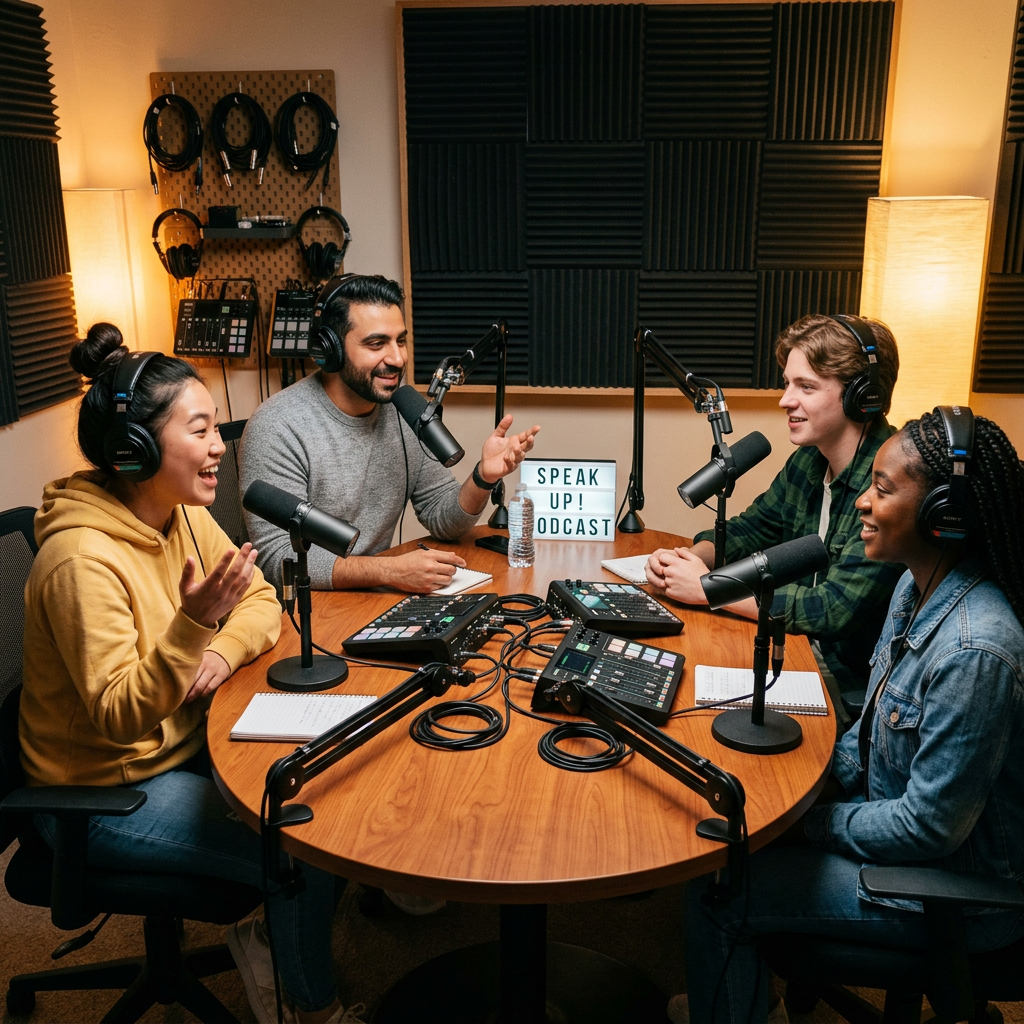
Guest arrangements also shape the production setup. A two-person interview requires a different configuration than a roundtable with several speakers. When guests participate remotely, the production incorporates the equipment and connections required for remote recording.
The recording format also determines how the team prepares each session. The studio must accommodate the appropriate seating and microphone configurations for in-studio guests and remote contributors. Hybrid sessions combine both arrangements within a single recording.
Examine Editorial Support
A podcast studio can support the production process beyond the recording session. Concept development shapes the program before recording begins; editorial consultation guides episode structure and direction. Post-production transforms the recorded material into a finished program tailored to its intended audience.
Production services often include editing, mixing, graphics, and short-form clips for distribution across additional channels. These services extend the production process from the recording session through publication. Studios with broader corporate video production capabilities also support podcasts that require polished visual content.
Review Guest Integration
Remote guests introduce practical production requirements that extend beyond sending a meeting invitation. Connection methods, microphone quality, speaker placement, and communication between the studio team and participants all influence the recording session. A well-designed setup allows producers to coordinate remote and in-studio contributors within the same episode. Key guest-integration features include:
- Phone connectivity allows guests to participate without specialized recording equipment.
- Echo and noise management help maintain consistent audio quality when participants join from different environments.
- Multi-speaker support accommodates interviews, panels, and group discussions.
Remote participation also expands the range of guests available to a podcast. Experts, executives, journalists, and other contributors can join without traveling to the studio, making remote capabilities particularly valuable for programs that regularly feature people from different locations. A reliable remote setup keeps those conversations integrated with the broader production rather than treating them as separate recording arrangements.
Evaluate Podcast Acoustics
Audio quality depends heavily on the environment in which voices are recorded. An acoustically optimized podcast space helps control unwanted sound, while professional microphones capture each speaker clearly. Multitrack recording gives editors separate audio tracks for individual participants, providing greater control during post-production. The room itself becomes part of the recording system when multiple people share a conversation. Professional mixers and recording software provide additional control over individual voices, levels, and the overall mix. A dedicated podcast facility is designed around these recording requirements, making it more specialized than a general meeting or conference room.
Plan Content Outputs
A podcast recording produces content for communication beyond the primary episode. Video footage supports full-length episodes, while selected exchanges provide material for shorter social media clips. Graphics identify speakers, introduce episode titles, and provide additional information for viewers. Key media output types include:
- Full episodes: Create audio or video podcasts
- Short clips: Cut out the desired portions and upload to social media
- Graphics: Use graphics to make people identifiable or to help provide information about the episode
A single recording session is able to generate material for multiple stages of a communications campaign. An interview can become a full episode and several shorter clips for distribution across different channels. Identifying these uses before recording helps the production team determine the required recording format, coverage, and post-production work.
Learn More About Corporate Video Production
Podcast studios also support the creation of a broader library of recorded content. One conversation can produce a full episode, short social clips, and visual content for other channels. A consistent recording setup helps maintain a unified look and sound across formats; planning these outputs in advance helps the production team determine the requirements for each recording session. Contact a corporate video production company to discuss your podcast format, recording needs, and planned content outputs.